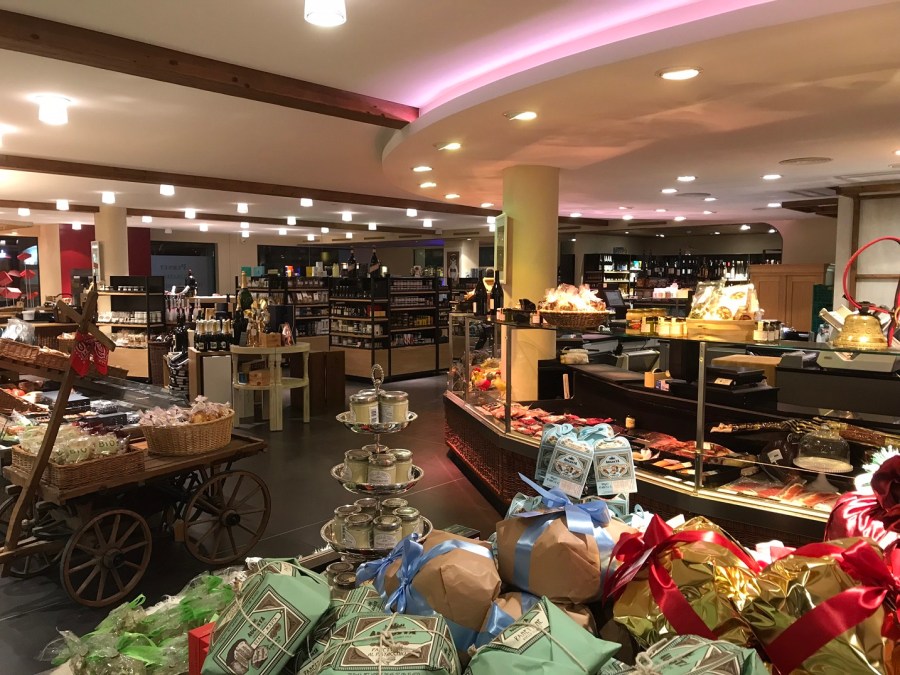
Physical stores and shops are doing well, with many also thriving. People are going out shopping on main streets of cities and towns or in shopping centres. Contrary to predictions on the decline, even demise, of physical stores in face of online retailing, and moreover following the widespread shutdowns during the Corona pandemic, brick-and-mortar retailing largely recuperated and retailers regained the favour of visiting consumers-shoppers. Challenges and difficulties, however, are not missing, the competition is tougher, and getting successful demands more effort, ingenuity and creativity. An important path to success is by construing immersive in-store experiences.
Henrik Hagtvedt and Sandeep Chandukala (2023, [1]) propose that a lively combination between two key contributors to positive shopping experiences, convenience and interest, would lead to more immersive in-store experiences that attract and captivate consumers. While online retailing holds an advantage in offering greater shopping convenience, shopping in physical stores presents real opportunities for imbuing the experience with interest in addition to convenience to make it immersive. Generating interest in online stores, on websites or mobile apps, is more limited because the interface lacks in the levels of contact and stimulation achievable, compared with the environment of physical stores. Nevertheless, they suggest that establishing better coordination and collaboration between the modalities of offline and online shopping, and introducing more advanced technologies (e.g., AR & VR), can increase the benefits for retailers and consumers in the physical stores as well as in the online-digital channels.
- Note: The authors refer at first to the competition of physical retailers with online retailers, treated as separate entities, but they subsequently relate to retailers that operate both offline and online channels, and the better possibilities entangled in using the different modalities. Many large and also medium retailers can now be found offering their merchandise in both brick-and-mortar stores and in online stores. Retailers that have been described as physical-first or online-first are seen moving in both directions, that is, by entering the other domain to add channels for interacting with consumers. The key to success lies, however, not in operating those channels in parallel (i.e., as separate silos) but by coordinating and complementing between them.
Hagtvedt and Chandukala offer a 2 x 2 typology based on convenience and interest. Each of these contributors creates a different ‘benefit’, as described below, but a retailer has to work towards combining them through features that provide convenience and interest altogether in a way that produces an immersive experience. Immersion means that the scene created fully captures the “attention and perceptual apparatus” of the person (shopper); it is comparable metaphorically to the experience of being submerged in water [1]. In the 2 x 2 matrix of their typology, each quadrant is associated with a group of features as follows:
| Facilitate: features high on convenience but low on interest — improve the ease of shopping without sparking interest. | Engage: features high on both convenience and interest — spark interest while contributing to the ease of shopping. |
| Disengage: features low on both convenience and interest — encumber the shopping process without sparking interest. | Stimulate: features high on interest but low on convenience — spark interest without contributing to the ease of shopping. |
The authors clarify that they have chosen to label the top-right quadrant ‘engage’ instead of ‘immerse’ since the typology concentrates on two contributors and is not comprehensive; there are other aspects that may contribute to immersion (such as pleasure) that are not in the focus of this model but should not be ignored. They highlight the ‘integrated’ features in the top-right quadrant that simultaneously improve convenience and spark interest, which would be more effective and powerful for engaging (immersing) consumers, but they might also be more difficult to obtain. There is still a possibility for retailers to use a mixture of convenient features (‘facilitate’) with interesting features (‘stimulate’), that could be effective when tied better together. The goal is eventually to create an in-store setting or environment that as a whole is convenient and interesting, as the stage for an immersive experience.
- Hagtvedt and Chandukala view interest as a cognitive outcome, stimulated by something that is, for instance, intriguing or thought provoking; it is similar to evoking curiosity, that can motivate or encourage exploration and approach behaviours. They acknowledge other views of interest as emotional or motivational (e.g., strong interest that rises to enthusiasm may also be considered emotional). It should be noted that ‘stimulate’ is linked here specifically with ‘interest’ out of a broad range of stimulations and their effects (e.g., enjoyment or fun, appetite).
- The authors draw an interesting analogy between convenience that entails easy shopping and fluency that entails easy processing of information. They note that aspects such as novelty, ambiguity (e.g., as in puzzles, symbols, metaphors) and complexity can elicit greater interest but usually do not align with ease. Yet, there are contexts, they suggest, where interest can combine well with relative ease (e.g., as in experiencing a feeling of ‘flow’). Thereof, fluency can also help people get interested more quickly and with less effort.
Hagtvedt and Chandukala suggest various features (e.g., in design, services, technologies) for implementing each of the three functions-‘benefits’: facilitate, stimulate, and engage. It will be less productive for immersion to focus only on features of interest or features of convenience; in particular, investing only in features that evoke interest may lose its impact if inconveniences impede or disrupt the shopping experience, and thereby impede immersion. As put pointedly by the authors: “Immersion seems unlikely if a shopping experience is interesting but difficult or if it is easy but boring“.
Features that disengage usually involve routine and mundane actions, associated with basic tasks during shopping (‘chores’). It may be architecture, layout and design of the store space that garner neither much attention nor aesthetic appreciation, and they could make navigation in the store just harder.
As examples for features that facilitate, the authors suggest some practical solutions that would be conducive to the ease of shopping. Those solutions are based on the use of technology: a mobile app or kiosk for self-service checkout, smart shopping carts, and ‘buy online, pick up in store’ service (aka ‘click & collect’). They allow shoppers more autonomy and flexibility, with the promise of better managing and saving their time. But it depends of course on the skills of shoppers in using the technology (e.g., interfaces, following the process), and their trust in its reliability and accuracy (e.g., correctly identifying and registering their purchases in the bill by a mobile device & app or smart cart). These features are not particularly strong in creating interest, yet they are not expected to contribute much respectively.
The click & collect service is probably the most pervasive these days, frequently used by shoppers, whereas smart carts are apparently the least present in stores (but progressing). The efficiency of buying online and picking up the order in ‘a store near you’ depends especially on the real-time update of the inventory information provided to consumers online; smart carts rely more heavily on AI-powered abilities [1]. As stated by Hagtvedt and Chandukala: “The main aim is to reduce friction and enhance convenience”. However, delivering on this aim relies on the smooth, user friendly and reliable operation of the digital technologies applied, and yet using them may still not feel natural and convenient for some shoppers (e.g., the less technology proficient, the elderly). The authors relate briefly to aspects of layout, design or display in the store that can make shopping more convenient (they refer to the excellent book of Herb Sorensen, 2009, “Inside the Mind of the Shopper”).
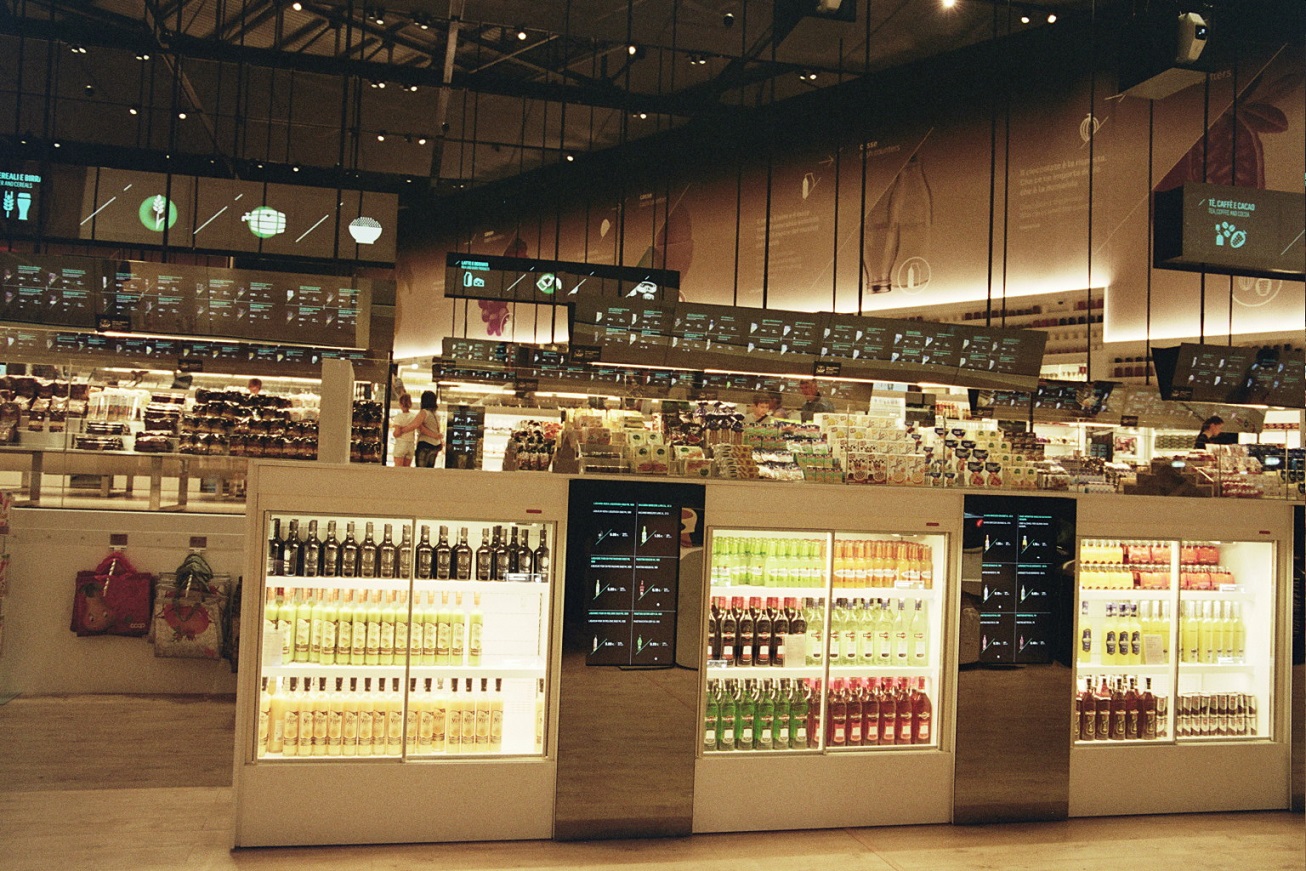
On the other hand, the features that stimulate are designed with expectation to spark interest, though without contributing much to convenience (e.g., a mysterious location in a hidden alley). The authors relate to aspects that can potentially raise interest such as architecture and interior design (e.g., visual aesthetic appeal, artistic inspiration) and elements of atmospherics, including music, lighting and ambient scent. The area of sensory marketing concerns particularly these kinds of stimulations in different sensory modalities, most commonly visual, where one of their effects would be sparking interest (yet also inducing pleasure as an additional contributor to immersion).
The first example given by Hagtvedt and Chandukala is illuminating: art exhibits. The display of artworks in a store or shop can vary in scope, artists featured, and scale (size) of framed paintings. (Note: it can possibly apply also to public areas of a shopping centre). The artworks can “spark interest as well as boost the appeal of associated products”. However, the authors remark that it is hard to conceive that the artworks contribute to the convenience of shopping, due to transcending or overshadowing, for example, the functional concerns in the store. They also caution that ambiguity in artistic expression may conflict with the goals of marketing communication and impede the ease of understanding. Nevertheless, the exhibition of art in a store can have important advantages for the retailer via its ability to generate interest of shoppers: attract customers to visit the store, keeping them from moving too fast in the premises, and further inspire the shoppers to spread word of mouth [1].
- Infusion of visual art in marketing contexts of advertising, product design or its packaging, can ‘feed’ a luxury perception of consumer products, and consequently elevate their evaluation (Hagtvedt and Patrick, [2]). Yet, as noted above, in some circumstances in a retail context the art exhibit could be distracting and have an adverse effect on luxury products. The exhibit of artworks may still contribute, however, to the ambience and luxury feeling of the store, and desirably spark interest in the store itself as a whole.

Additional features or methods the authors present are in-store live events and gamification. Live events create dynamics in a store that can ignite interest and a buzz. They may involve product samplings, demonstrations, or launches of new products, including exhibition parties (e.g., fashion) and ‘workshops’ that give an opportunity to educate consumers about the new product. They have the potential to attract new customers or enhance loyalty of existing ones. Consider, for example, a cooking & tasting live event (e.g., in food or kitchenware stores), or a meeting with a book writer in a bookstore (e.g., for read-out from the book, a talk, and signing). An event done right, advise Hagtvedt and Chandukala, can “enhance a shopping experience and leave a lasting impression”. But they caution that such events might become inconvenient, when customers-shoppers who participate feel it takes too much of their time and effort, and to those less attracted who get annoyed that they have to find their way to avoid the fuss.
- Instead of gamification, let us consider here the activity of taking photographs in a store, primarily these days with smartphone cameras — photos that shoppers may share by sending or posting, keep as reminders and aids to decision-making, and furthermore, stores may organise competitions around those photos with credits and prizes for outstanding photographs. The activity of taking photos is likely to deepen the engagement of consumers in their (in-store) experience, and thereof increase their interest in the (shopping) experience, as well as enjoyment from it (Diehl, Zauberman, & Barasch, [3]). However, it may have a drawback, if the shopper is regarded as an active participant making choices (rather than exploring, as a passive viewer), it may distract him or her from the focal decision activity, and thus become less convenient (cf. [1] & [3])
In the fourth group we meet the top-end features that engage by interweaving convenience and interest. These are the more innovative, encompassing or sophisticated “features”, which entail actually whole methods, programmes or technologies for construing immersive shopping experiences. Hagtvedt and Chandukala focus on a number of optional solutions:
- Functional aesthetics — when an aspect of the store with a functional goal (e.g., layout, display arrangements, signage) is well-designed, it can appeal aesthetically to consumers in the elegant way it makes their shopping experience pleasingly easier.
- Visual merchandising and atmospherics — visual merchandising combined with elements of atmospherics can be visually appealing (as well as via other senses) and attract attention, stimulate interest, while also have an informational value, facilitating shopping convenience.
- In-store restaurants — adding entertainment, socialising, and convenience of dining out.
- Micro retailing — a retailer with a large assortment of products presents a selected, reduced collection in a smaller space of a ‘micro store’, for making displays less crowded, more appealing, and easier to find needed products, complemented by buying online from the full range of products.
- Augmented Reality (AR) — enabling shoppers to visualise data, objects or actions beyond what is physically present on-site and also curate a customised design of the product for ordering (the authors give examples of coffee making process at Starbucks’ Roastery, customising BMW cars).
- Virtual Reality (VR) — providing a greater virtual, imaginative experience, transporting consumers to factories or natural (e.g., exotic) environments, to see for example sourcing and production processes (VR may be utilised next to AR to extend the information deliverable by AR).
- Mixed reality (MR) — an emerging technology that incorporates elements from VR into an AR environment to enhance the customer’s experience but without creating a “full VR immersion”.
The authors put forward a structured list of research questions for a more extensive study on various issues, to seize on opportunities in implementing the different types of features but also realising and alleviating any apparent weaknesses.
Hagtvedt and Chandukala are not entirely clear on which types of features to incorporate or how they may be combined. They recommend retailers overall to move forward from features in the disengage quadrant (‘fundamentals’) to the quadrants of features that facilitate, stimulate, and especially those that engage. Hence, it is obvious that they put emphasis on the engaging (‘integrated’) features in the fourth quadrant. However, it should not mean that a retailer cannot incorporate also features whose strength is in improving convenience or triggering interest, though it may require to combine features in ways that mitigate their weaker aspect or compensate for it with another feature stronger on that aspect. There are good reasons for giving priority to the engaging features for their enhanced potentials, yet they may not be financially or logistically feasible for some retailers. Retailers incorporating features from the different quadrants should drive towards creating a synergy among them or building a story around them.
The two-way typology schema proposed by Hagtvedt and Chandukala for developing vital immersive in-store experiences is both interesting and practical. Although the model is not comprehensive, since it concentrates on the two contributors of convenience and interest, the programme built around them is elaborate and rich in detail and possibilities to implement. They suggest at least one additional contributor, pleasure, that will help to advance from an engaging to more fully immersive experience. The authors raise the importance of installing digital technologies in physical stores, collaborating between offline (in-store) and online channels, and employing knowledge of consumers gained through data analytics. Devising the strategy for implementation is open to the final judgement of retailers.
Ron Ventura, Ph.D. (Marketing)
References:
[1] Immersive Retailing: The In-Store Experience; Henrik Hagtvedt and Sandeep R. Chandukala, 2023, Journal of Retailing, 99 (4), pp. 505-517 (DOI: 10.1016/j.jretai.2023.10.003 ScienceDirect)
[2] Art Infusion: The Influence of Visual Art on the Perception and Evaluation of Consumer Products; Henrik Hagtvedt and Vanessa M. Patrick, 2008; Journal of Marketing Research, 45 (3), pp. 379-389.
[3] How Taking Photos Increases Enjoyment of Experiences; Kristin Diehl, Gal Zauberman, & Alixandra Barasch, 2016; Journal of Personality & Social Psychology, 111 (2), pp. 119-140.
 A Gateway to Consumer and Customer Behaviour