
Whether in a restaurant or a coffeehouse, customers usually focus primarily on the quality and taste of food and drinks served. But the success of a business as such depends on additional factors, including its customer service, operations (e.g., logistics, maintenance), business strategy, and not least its marketing and financial management. Businesses in the food service sector may do very well with their food yet appear to fail after a while (often within the first five years) because of mistakes and poor performance on the other factors. Larger and expanding businesses (i.e., chains) tend to run into difficulties, sometimes severe, due to mismanagement of their franchising (or licensing) network. The managerial aspects can be crucial to successful performance of businesses serving food & drinks (e.g., restaurants, coffeehouses, patisseries, ice cream parlours, and any combinations of them).
It is pleasing to look from time to time at businesses in the sector that succeed by planning, performing and executing exceptionally well on multiple aspects of managing their food service establishments. This post places the spotlight on the business enterprise Nono Group as a case in example. This Israel-based group owns and oversees (as of December 2024) the management and operations of three chains: Italian restaurants (Nono), coffeehouse-patisseries (Mimi), and Asian restaurants (Giraffe). They will be regarded here as business units: Nono and Mimi are home-grown brands by Nono Group (founded in 2014), and are closely-knit together, while Giraffe was acquired by the group in late 2021.
A trait that makes this business enterprise special is its originators: they are not professionals experienced in the food industry but are experienced senior executives from the high-tech industry (Dovev Lewinsohn & Yaki Boneh). They have come, therefore, with a different mindset to establishing their food business venture, brought from the fields of high-tech and venture capital, and henceforth also have been successful in adopting and applying practices to achieve greater efficiency in management of the business enterprise, initially with Nono & Mimi. The title of an article in the business newspaper TheMarker expresses this trait concisely: “A Restaurant with a Methodology of a High-Tech Company” [1].
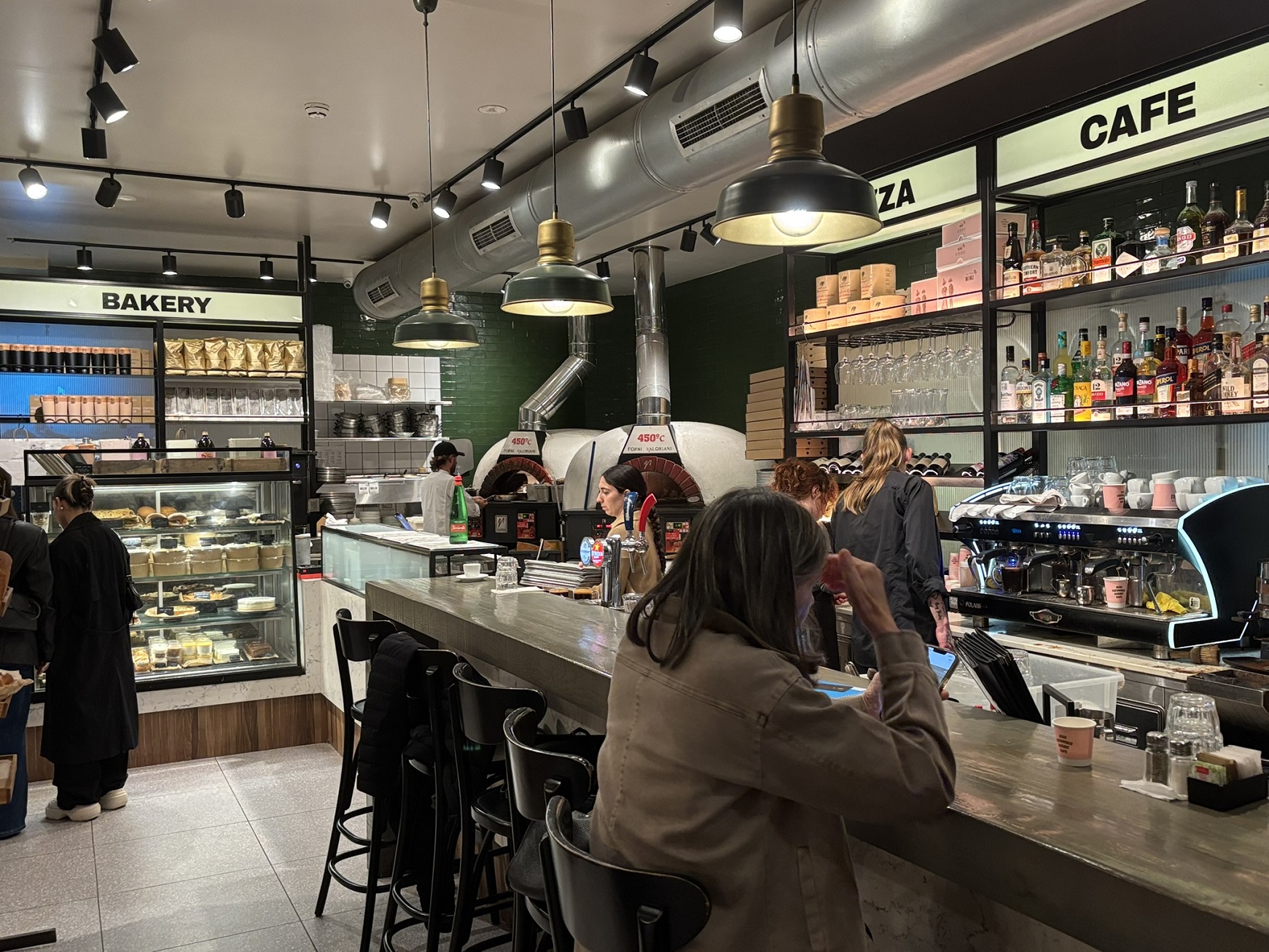
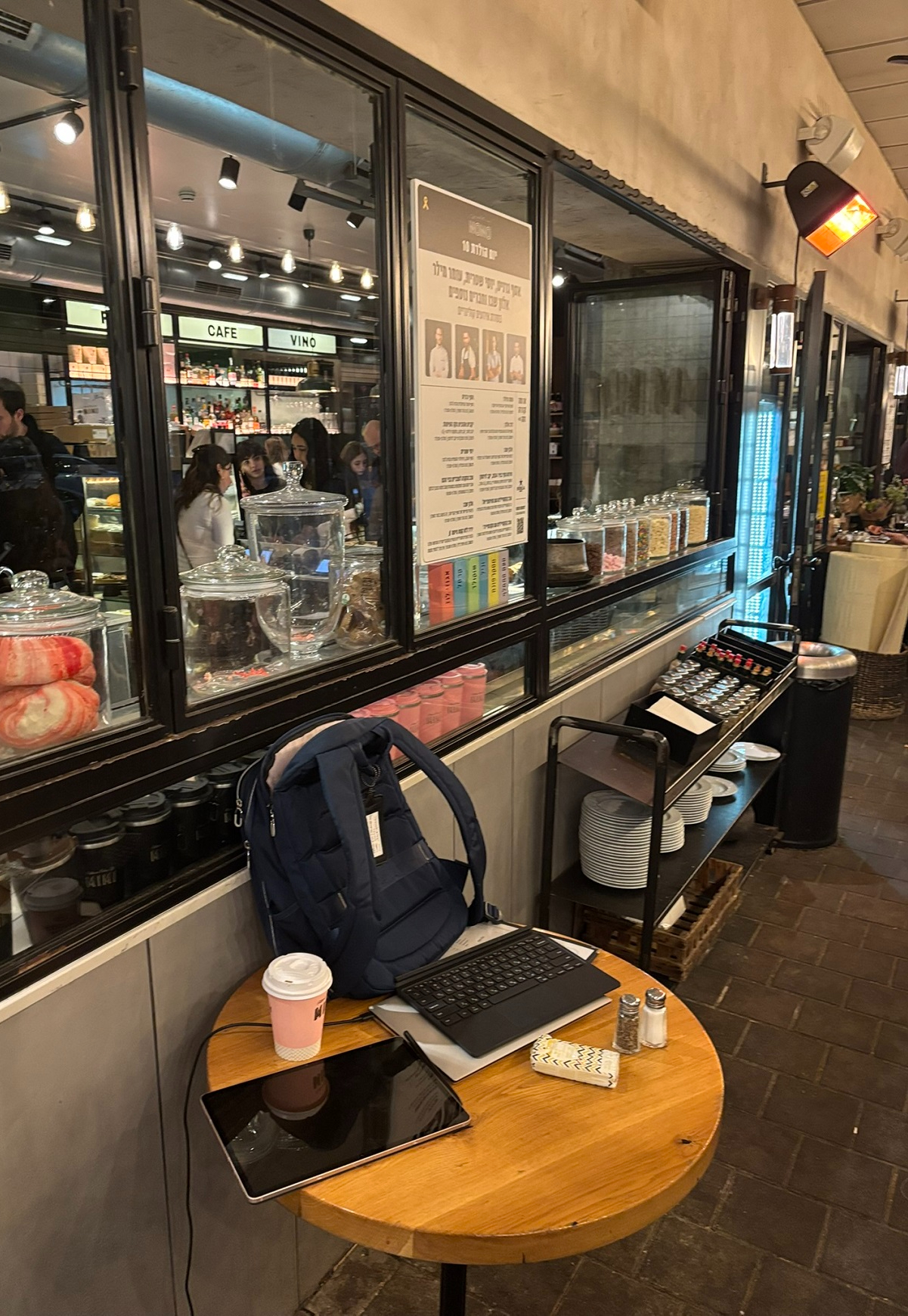
The sub-title of Nono restaurants is entailing their key offerings: “pizzeria, gelato, vino“; in addition to pizza, ice cream, and wine they also serve other dishes (e.g., pasta, salads) and drinks. Mimi is a patisserie, bakery and coffeehouse. They offer a variety of cakes and other desserts in addition to various patisseries, sandwiches and quiches. The locations of Nono and Mimi are mostly adjacent (2) or integrated (7) into a unified large venue (there is one other Mimi ToGo branch). Hence, it may be stated that the group operates (at the end of 2024) nine (9) pairs of Nono & Mimi locations (when integrated they are called “Nono Mimi”). Practically, a customer sitting in a Nono Mimi integrated venue can order and enjoy the whole range of products of the two business units across their specialisations (i.e., transparently).
The Asian restaurant business Giraffe was founded in 1996, a veteran and popular provider of Asian cuisine in Israel. The chain operates (in December 2024) ten (10) restaurants that are located across the country. Its first restaurant was launched on a main avenue of Tel-Aviv as a noodle bar and later was expanded into a restaurant (the restaurant re-located lately to a nearby flourishing business district). The menu includes primarily noodle and rice main dishes, plus traditional first course dishes of the Orient and sushi servings; it is based mainly on Thai cuisine but with tastes also from other countries (e.g., Malaysia, Philippines, Japan).
- Note: Lewinsohn has actually had an involvement (as a partner) early in his career in a restaurant business [1]; thus the “bug” may have stayed with him over the years, until his return with a different kind of business and managerial perspective. Furthermore, the family of Lewinsohn is engaged in the wine industry: the boutique Lewinsohn Winery (headed by Dovev’s father and brother) supplies wines to the restaurants of Nono Group. It may be added that Lewinsohn and Boneh are relatives (brothers in law).
The Business Aspect
Lewinsohn (60% of shares) and Boneh (40%) approached their venture with the aim from start to establish a leading food service company that will attract investors (through a private investment fund). But, at the same time, they preferred to run a chain of restaurants in full control to avoid the hassle of reporting and answering to many shareholders. Eventually, they chose to raise funding from a main investor, and in December 2021 they successfully obtained 60 million shekels (~US$18.6m) from Leumi Partners, an investment arm of a major bank in Israel (Bank Leumi). The agreement was made with an expectation that Leumi Partners will later receive in return a holding of 20% of shares in Nono Group [1]. The funding was meant also to help them with the acquisition of Giraffe (for 70m shekels). Leumi Partners was presumably convinced to get engaged with Nono Group not so much by financial attractiveness of the restaurant sector as by the managerial attitude and conduct of the company. The founders have in mind, according to TheMarker, a goal to turn Nono Group into a public company, but this could depend very much on their expansion strategy and progress.
The founders apparently brought with them from the high-tech industry values of efficiency, reliability and excellence (e.g., making no compromises on quality). Subsequently, these values may imply discipline, consistency, and attention to details. For instance, Lewinsohn is said to spend much of his time visiting Nono & Mimi venues continuously where he inspects them carefully for proper practices in the kitchen, cleanliness of seats, etc. [1]. It is somewhat difficult to foresee how innovation or ingenuity will be enacted in this field: innovative interpretations in recipes can be tricky in getting customer approval, but innovation may be implemented in other ways (e.g., service, interior design, marketing), and in managerial approach and practices as seems to be the case for Nono Group.
The Nono & Mimi establishments are purposefully located in more affluent business districts and upper-scale neighbourhoods. They are set to appeal to more savvy customers who appreciate higher quality and carefully prepared food delicacies. The customers are expected to be capable and willing to pay for higher quality on a more frequent basis. Their prices are similar to competitors in the specialty or more exquisite segment of restaurants, coffeehouses and patisseries. Orders can be made at a cashier counter or a self-service digital kiosk; customers receive a message on their mobile phone when the order is ready and can pick it up from a counter. The Asian restaurants of Giraffe, serving at tables, seem to fit well with the profile of Nono & Mimi in terms of quality of tasty food, kind and timely service, interior design, and maintenance (the fit in locations is partial).
- The founders considered acquiring another chain of popular restaurants of Greek cuisine, but the deal did not materialise. They are interested in businesses that are popular and profitable and that will match the profile of a food service company they aim at. It is currently unclear what other restaurant chains Nono Group may look for in coming years.
Lewinsohn and Boneh remain reluctant to adopt a model of franchise to expand their chains, particularly Nono & Mimi [1]. The article in TheMarker details the benefits of working with franchisees, as is most common for food service chains, in relieving the franchiser from several operational and financial responsibilities in restaurants, while relying on the commitment of restaurant owners-franchisees who desire to achieve success. On the other hand, the founders of Nono Group are rightly concerned about the greater difficulty of ensuring the high standards of quality they wish to sustain; the success of a network managed through franchising also depends on healthy, productive and even amicable relationships with their franchisees-partners. There could be an additional challenge, if restaurants are owned by franchisees, of holding minority shares in them [1].
Nevertheless, the goal to attract investors who will buy the company’s shares traded in the equity market (i.e., as a public company) could stand in conflict with the inclination to keep their restaurants and coffeehouse-patisseries operated in full operational control. Investors are likely to expect chains to exceed a certain threshold number of venues for showing interest in them, and the expansion needed may be very difficult to obtain while keeping all of them in tight control of the “mother” company. Another way for expansion of Nono Group is by joining additional food service businesses (chains, as they did with Giraffe) that will fit the requirements of the ‘holding’ company (e.g., financial performance, quality, brand image, target customers), and thus make them more appealing to investors. The founders have a considerable challenge ahead of them, resolving the apparent conflict and joining compatible businesses.
The Culinar Aspect
On the culinar aspect Nono and Mimi seem to do very well. Their various food offerings (savory and sweet) are pleasingly tasty, well prepared, and appetising to the eye. They offer eight kinds of classic pizza (i.e., on tomato bedding with different toppings) plus four kinds of pizza bianca — this limited number of items probably helps the kitchen staff to keep their preparation under control and assure the quality of each and every of those pizzas. The number of items in other categories also appears to be reasonable, amendable to quality control (around ten items). Moreover, cognitively this size of choice set in each category is agreeably easy for consumers to make their choice decisions. Their desserts (e.g., lemon tarte, tiramisu), if one may add, are pleasurable.
The occupational background of Lewinsohn and Boneh is not in cooking and baking — they are managerial executives concerned with business issues of their food services. They have to recruit, evaluate and employ the professional talented team they can trust to provide the quality standards they aspire for. This differs from a business model where the owner is a professional in cooking or baking (e.g., to the level of artisanal expertise as a chef or pâtissier); thereof, it is recommended for the owner to hire professional managers to look after the business affairs. There can also be a model of partnership between a professional cook and a businessperson. Each of these models carries advantages and risks. It seems that Lewinsohn and Boneh have been making good choices of food professionals for their teams at Nono and Mimi. Nonetheless, they are likely, and can be expected, to acquire greater knowledge with time, especially to allow them to better judge and verify that the food prepared is to their expectations.
The business unit of Giraffe is in a different status for the founders of Nono Group, received as ‘ready-made’ and with established good reputation. Many of the dishes are tasty to delicious, and the restaurants successfully keep up for years their quality and tastes. They have also done well in occasionally introducing new dishes. The menu is overall interesting and varied. The service team is usually courteous and accommodating (e.g., removing spicy ingredients to the request of customers more sensitive to hot flavours). Beyond the business aspects, these attributes must have been appealing and satisfying to Nono Group’s founders.
The Social Aspect
The social attraction of a restaurant or coffeehouse should not be overlooked. There is importance for customers-patrons to how welcoming, convenient and appealing is the venue for having meetings with friends and family. Social gathering holds a special value for consumers; being attractive in this regard can make a critical contribution to the business (and can relieve the business from advertising).
The Nono Mimi establishment in a northern suburb neighbourhood of Tel-Aviv seems to make an excellent example. The restaurant and coffeehouse-patisserie ‘compound’ happened to be ready for opening in the midst of the Corona pandemic (~2021), which raised doubts how it would survive, but such concerns dissipated during 2022. (As a curious note aside, Nono Mimi was built in place of a branch of Bank Leumi.) During the pandemic, Nono Mimi gradually acquired customers for take away orders as no sitting on premises was allowed. However, the clientele seems to have grown much more quickly through 2022 and into 2023 as sitting at tables was made possible. The place is busy almost continuously from morning to evening with people, often in small groups, standing in line to find a free table. Yet most noteworthy from the social perspective, as seen recently, are the group meetings that take place there on Friday afternoons and Saturday mornings of mostly young people (appearing to be in their 20s and 30s), sitting together even without tables wherever they can find free space. In those time periods of the Jewish weekend the place is bustling, cheerful and energetic.
- The article of TheMarker [1] reports on busy gathering of customers in the morning hours of working days in two other locations, one near a prominent business district north of Tel-Aviv and the other in a residential area of a town south-east of Tel-Aviv — people seem to come there particularly before work. (Note: in the latter location, Nono Mimi and Giraffe are situated nearby).
The restaurants of Giraffe seem to be fitting and accommodating for social gatherings. In the newly relocated restaurant in Tel-Aviv, for instance, groups can be seated around large round tables (6-8 people) and at long rectangular tables (for 8+ customers), making it suitable also for hosting pre-ordered events (e.g., in evenings and on weekends).
Nono Group looks to be on the right track with promising prospects. It seems to have good record in quality and taste of food and customer service, for both Nono & Mimi and Giraffe. However, the founders Lewinsohn and Boneh have some considerable challenges ahead of them, especially with respect to their plans and strategy for growth and expansion. Experience shows that progress in expansion should be carefully guarded, moreover when the owners-founders aim to keep high standards in efficiency, quality and reliability. The process may require clear and strict objectives for applying their human and technological resources in managing their chain establishments, and furthermore if they decide to engage in franchising relationships. Customers will probably look forward seeing them stay on course.
Ron Ventura, Ph.D. (Marketing)
Notes:
[1] “A Restaurant with a Methodology of a High-Tech Company“, Hagai Amit & Adi Dovrat Meseritz, TheMarker: MarkerWeek (weekend supplement), 20 May 2022 (origin in Hebrew).
Website of Nono Group (in Hebrew): https://www.nono-group.com/ (links to Nono Mimi & Giraffe)
 A Gateway to Consumer and Customer Behaviour
Dr. Ventura’s article sheds a clear light on the success of Nono & Mimi. Very interesting and insightful piece.